
During routine maintenance, people often remember to change the engine oil and check the tires, but one key component that protects the engine is often overlooked—the engine air filter.

When many car owners find a dirty air filter, their first reaction is to blow it clean with an air gun or wash it with water and let it dry, saving the cost of a replacement. But is this widely shared money-saving trick really reliable? Today, let’s break down the common myths about air filter maintenance.
Myth 1: When the Air Filter Is Dirty, Just Blow It Clean with a High-Pressure Air Gun and Keep Using It
Many car owners think an air filter is just a piece of dust-filtering paper, and that blowing away the surface dust restores it to like-new condition. In fact, the air filter relies on a precise internal fiber structure to trap sand and dust while ensuring stable engine intake. High-pressure airflow can easily disrupt and puncture the filter media fibers, causing tiny damage that is hard to see with the naked eye.
It may look clean on the outside, but its filtration capacity has already been greatly reduced. Fine dust can penetrate the filter media, enter the cylinder, and accelerate wear on internal engine components. Remember: with an air filter, cleaning it more thoroughly does not mean better protection.
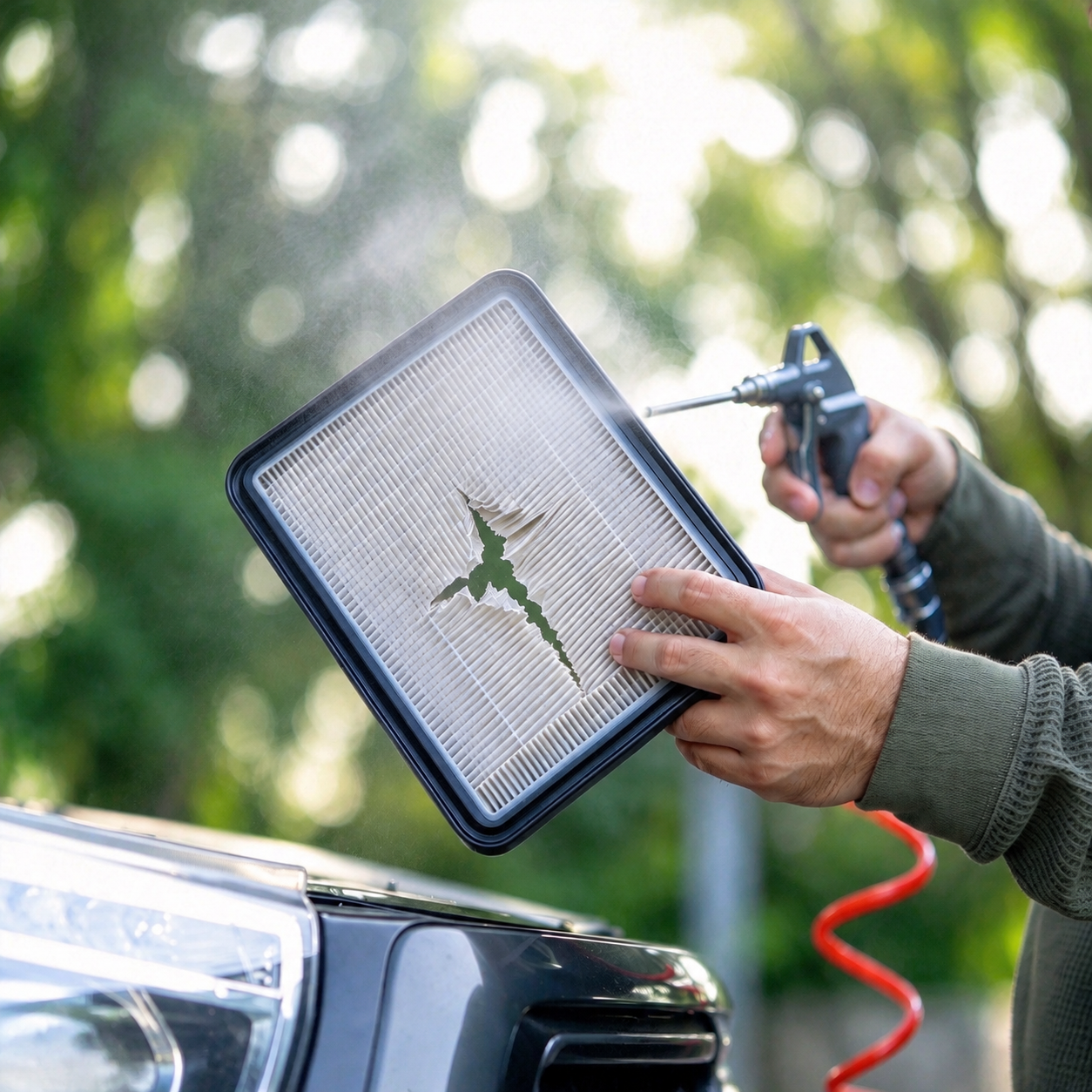
Myth 2: If an Air Gun Damages the Filter, Can I Just Wash It with Water and Let It Dry?
Since blowing is not okay, some people try rinsing it with water, drying it in the shade, and reinstalling it. However, most air filters on the market are not recommended for water washing:
-
The filter media fiber structure can deform and loosen when exposed to water.
-
The original filtration precision cannot be restored. There may be no visible difference, but protection has already declined.
-
The filter media and sealing ring can warp from moisture, leading to poor sealing and air leakage later on.
Filtration performance cannot be judged by appearance. Washing clean ≠ restored, and air-drying ≠ safe to reuse. The correct maintenance logic for MANN-FILTER air filters is not repeated cleaning and reuse, but timely replacement at the specified interval.

Why Is the Air Filter So Critical to the Engine?
When the engine runs, it needs to intake a large amount of air. Road dust and sand particles enter the intake tract with the airflow. The air filter is like the engine’s dedicated “protective mask.” A qualified air filter must balance two core requirements at the same time:
-
Efficiently filter out particulate matter and block impurities from entering the engine.
-
Reduce air resistance to ensure smooth intake without affecting power and combustion efficiency.
As dust continues to accumulate, intake resistance gradually increases, and both power and fuel consumption are affected. This is also why the air filter needs regular inspection and replacement when due.

When Should the Air Filter Be Replaced in Dusty Autumn and Winter Conditions?
Do not wait until the filter is completely clogged before replacing it. Especially for vehicles that often drive through construction sites, suburbs, and dusty roads, pay attention to these points in advance:
-
First, follow the maintenance interval specified by the vehicle manufacturer.
-
If driving long-term in dusty conditions, shorten the inspection and replacement intervals.
-
Replace immediately if the filter media is damaged or the sealing ring is cracked or deformed.
-
If you notice weak power or sluggish response, have the intake system checked at a service shop. Do not judge based only on seat-of-the-pants feel.
Rather than risk repeatedly washing an old filter, it is better to install a filter that fits your vehicle and meets OEM-grade quality standards when needed.

Post time:Sep-25-2020
