
You might have wondered: Both sides of a cabin air filter look almost identical,so why is there a strictly designated installation direction? Why can't it just be installed either way?
What actually happens if it's installed backwards?
To answer this question, we need to look closer at the internal engineering and structure of a cabin air filter.
The Two Key Performance Factors: Airflow Resistance vs. Filtration Efficiency
At first glance, a cabin air filter appears quite simple—just a pleated sheet of filter paper. However, this media is highly engineered.
The performance of a cabin air filter is determined by two primary factors:
- Airflow Resistance (Pressure Drop)
- Filtration Efficiency
Theoretically, higher filtration efficiency means cleaner air inside the vehicle cabin. However, higher efficiency can also lead to greater airflow resistance.
When airflow resistance becomes too high, it causes insufficient air volume from the HVAC vents, severely impacting air conditioning cooling and heating efficiency. When airflow resistance exceeds allowable limits, the cabin air filter has effectively failed.
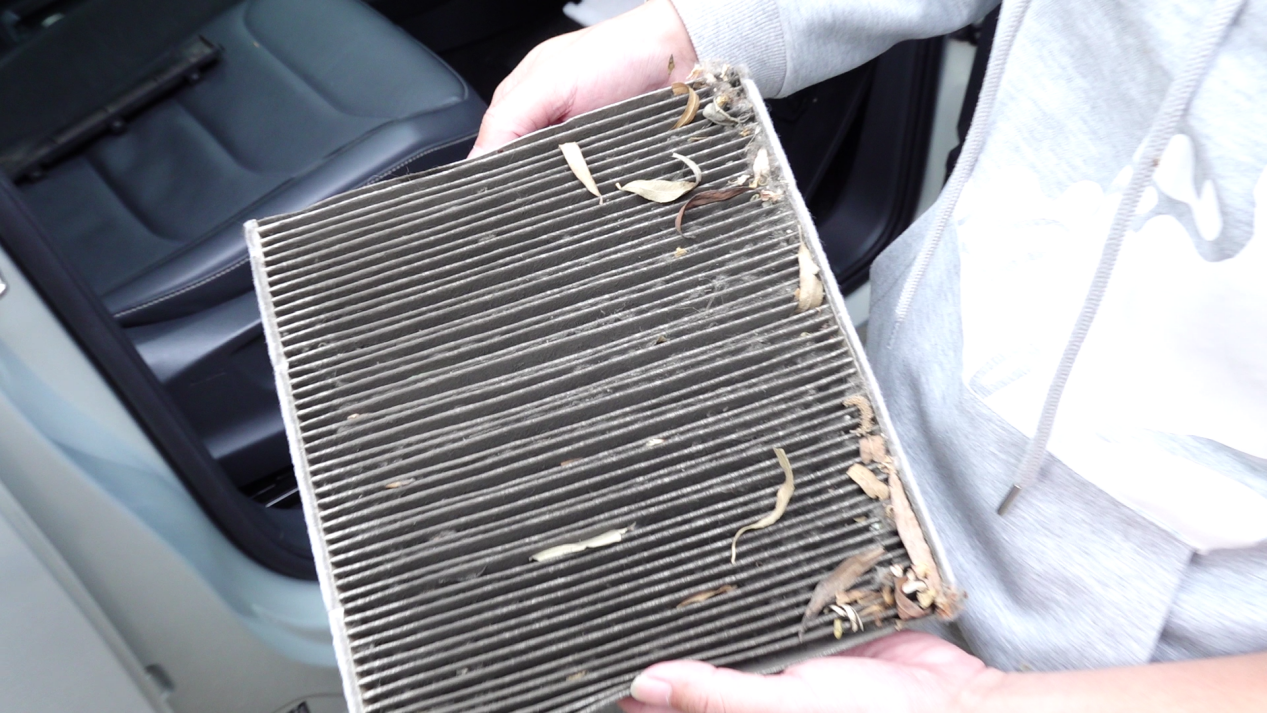
What Determines Airflow Resistance? Dust-Holding Capacity (DHC)
To understand airflow resistance, we must understand Dust-Holding Capacity (DHC).
As the name suggests, dust-holding capacity is the maximum limit of dust and particulate matter that the filter media can absorb. Once accumulated dust exceeds this threshold:
- Airflow resistance spikes dramatically.
- The filter media clogs and fails.
- The filter must be replaced.
Therefore, extending the service life of a cabin air filter requires maximizing its dust-holding capacity without restricting airflow.
How Graded Filtration Extends Filter Life
How do manufacturers increase dust-holding capacity?
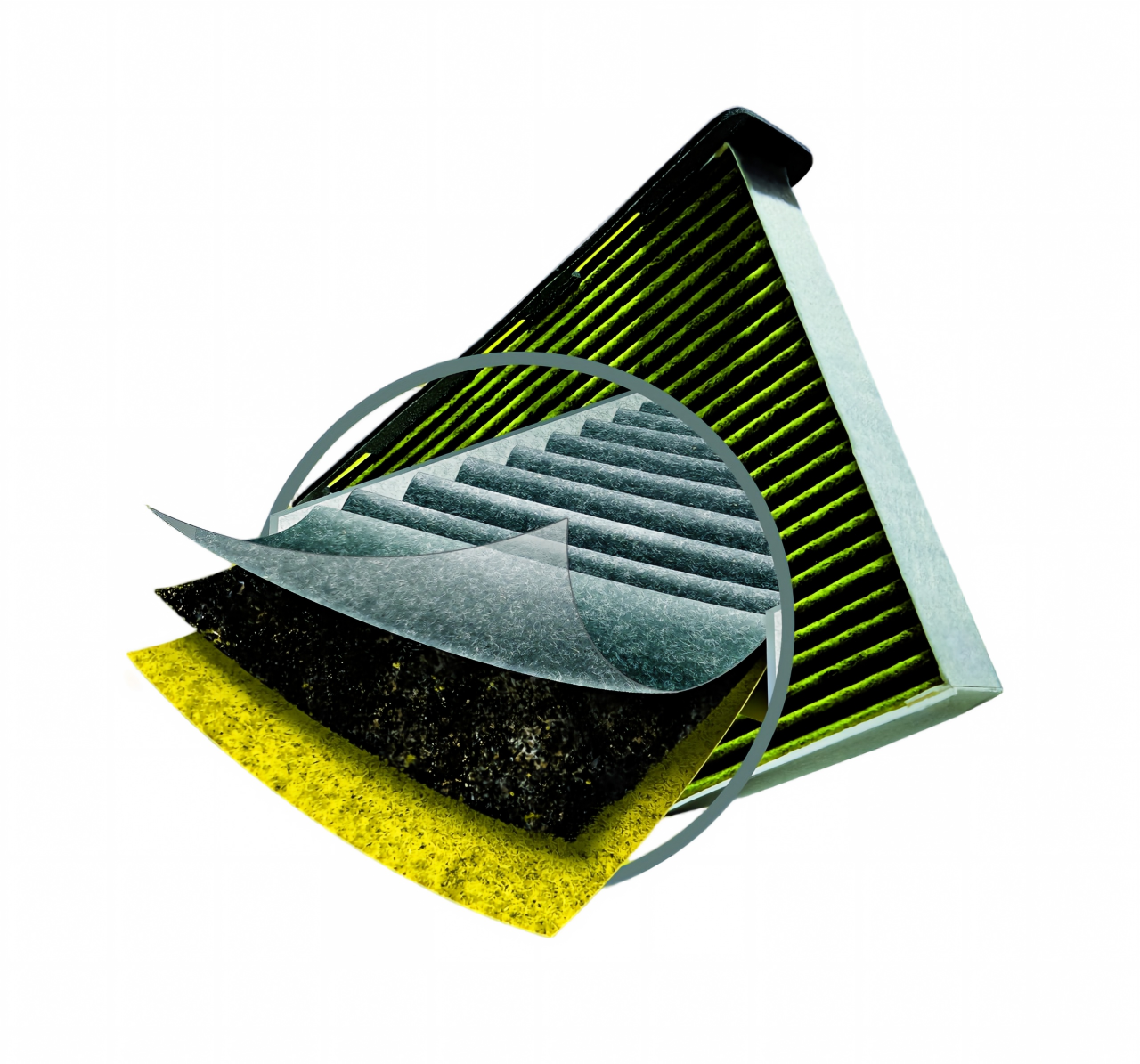
Beyond using advanced synthetic materials, the solution lies in a directional, multi-layer design:
- Coarse Filtration Layer (Pre-Filter): Faces toward the outside of the car (Air Intake Side).
- Fine Filtration Layer: Faces toward the vehicle cabin interior (Clean Air Side).
This layered construction allows particulate matter to be filtered "by size":
- Larger particles (leaves, pollen, coarse dirt) are captured by the outer coarse layer.
- Smaller microscopic particles pass through to be trapped by the deeper fine layer.
This graded filtration ensures even dust distribution across the entire depth of the filter, significantly increasing total dust-holding capacity.
The Real Risk: What Happens When Installed Backwards?
If you install the cabin air filter in the reverse direction:
- Premature Clogging: Large particles hit the dense fine-filtration layer immediately, rapidly clogging the microscopic pores.
- Wasted Coarse Layer: The coarse layer sitting on the clean side becomes completely ineffective.
- Restricted HVAC Airflow: High airflow resistance develops almost immediately, causing weak AC airflow, strained blower motors, and poor temperature control.
- Premature Filter Failure: The filter’s usable lifespan is drastically shortened.
Conclusion & Installation Tip
Cabin air filters are engineered with a specific airflow orientation for maximum dust capacity and airflow efficiency.
Important Installation Tip: Always locate the Airflow Arrow (AIR FLOW \downarrow/ \rightarrow) printed on the side of the filter frame and ensure it points in the direction of the HVAC system's air circulation (from intake toward the blower motor/cabin).
Post time:Sep-25-2020
