
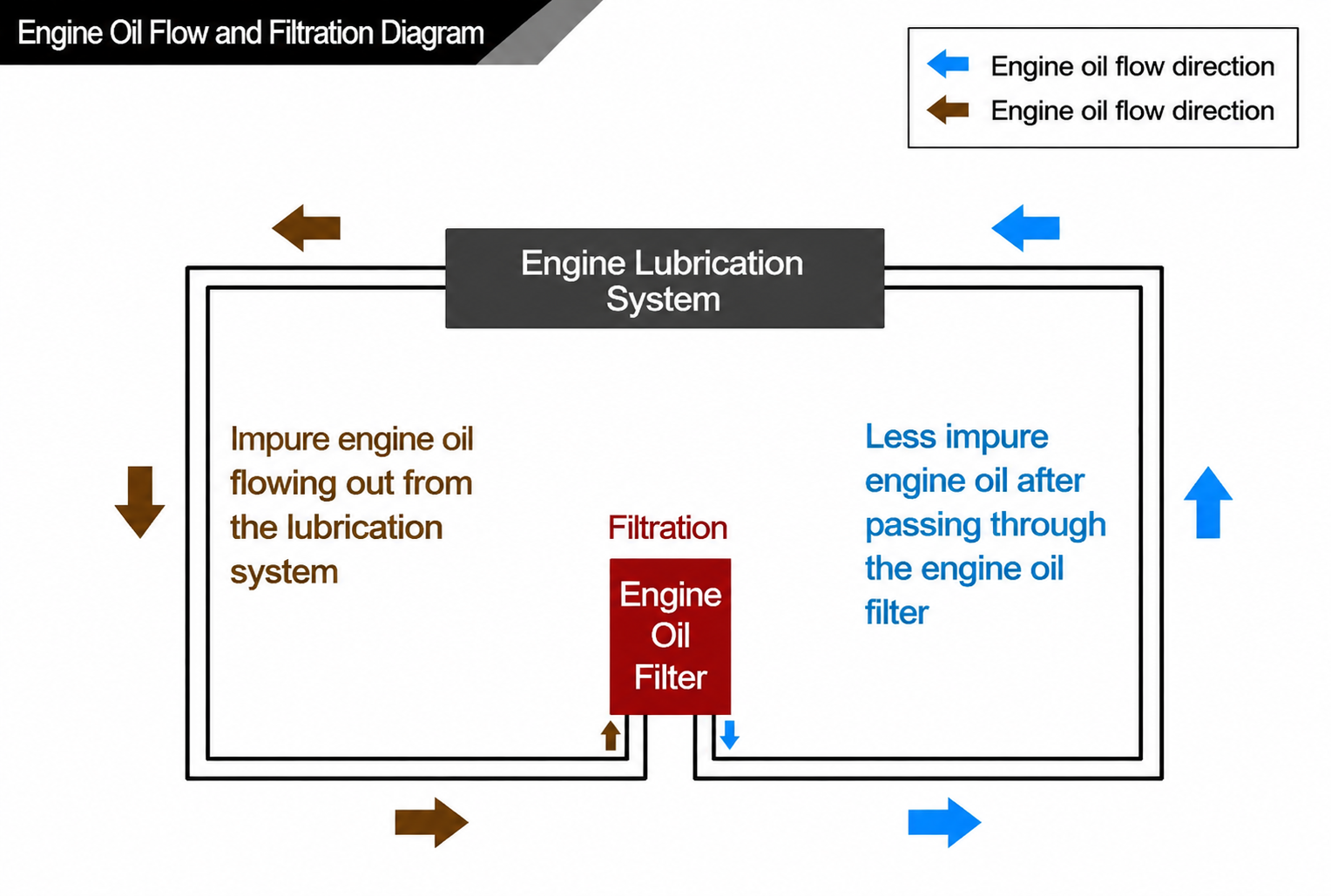
As a vital component of internal combustion engines, the engine oil filter plays an indispensable role in the lubrication system. It continuously filters out dust, metal wear particles, carbon deposits, and sludge formed during combustion that mix into the engine oil.
By keeping engine oil clean and protecting internal components, a high-quality oil filter significantly extends the service life of both the engine and its moving parts.
For any engine, the oil filter is just as important as the engine oil. Since many car owners invest in premium engine oil, pairing that oil with an equally high-grade oil filter is essential. Below is a detailed breakdown of what truly makes a good oil filter.
1.The Function of an Oil Filter
During engine operation, abrasive metal shavings, airborne dust, oxidized carbon deposits formed at high temperatures, colloidal sludge, and moisture constantly contaminate the lubricating oil.
The primary function of the oil filter is to remove these mechanical impurities and gums, maintain the cleanliness of the engine oil, and extend the oil’s effective service life.
2.Internal Structure of an Oil Filter
A standard spin-on oil filter consists of two primary sections—the filter element and the outer housing—supported by crucial operational components:
- Filter Media (Pleated Paper/Synthetic)
- Outer Metal Housing (Canister)
- Rubber Sealing Ring (Gasket)
- Support / Compression Spring
- Bypass Valve (Relief Valve)
- Anti-Drainback Valve
3.The Severe Dangers of Inferior & Counterfeit Oil Filters
Using a low-quality or fake oil filter can cause severe mechanical failure:
-
Poor Filtration Media & Low Surface Area:
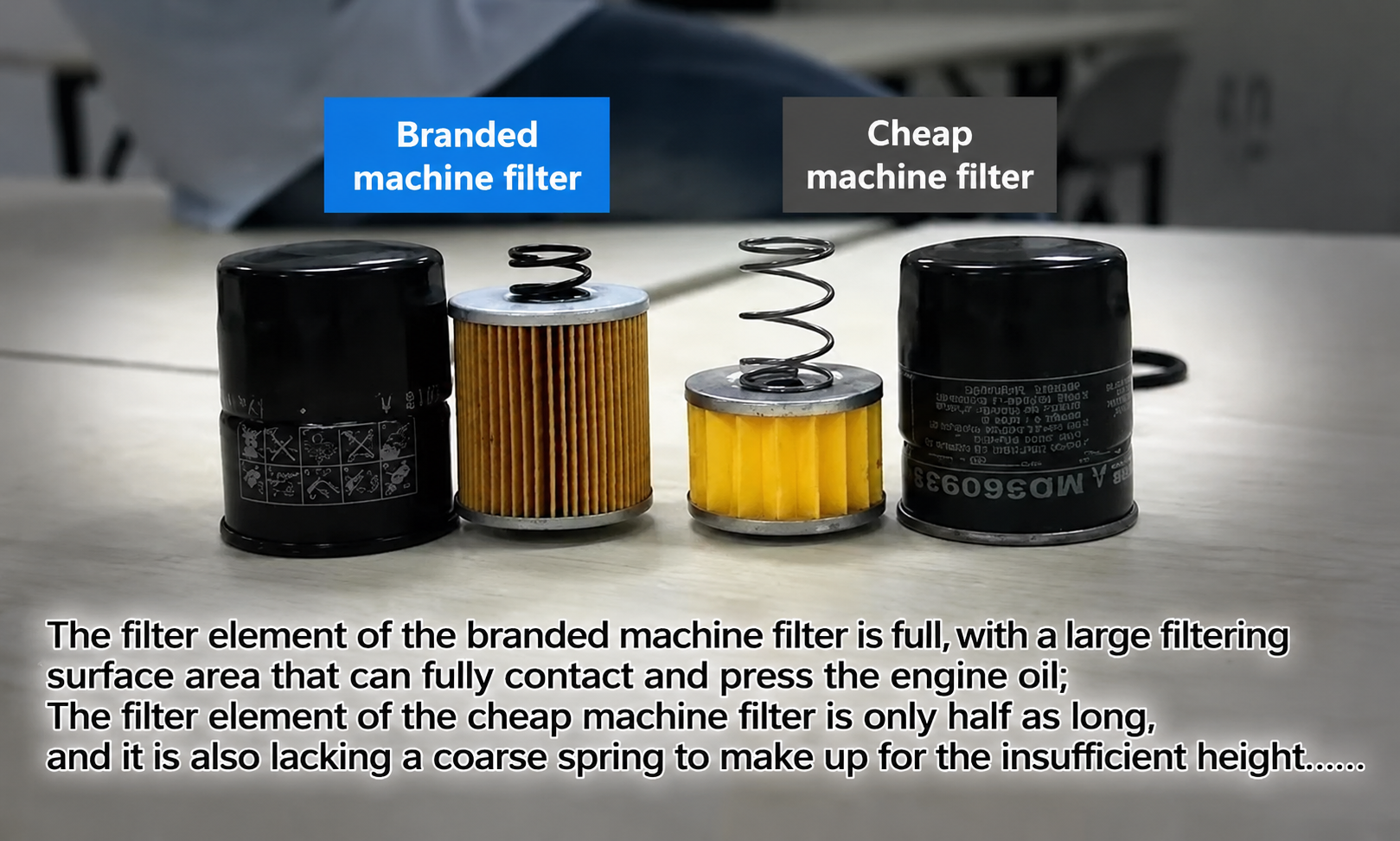
Inferior filters use cheap paper with insufficient filtration efficiency and smaller surface areas than OEM specifications. This results in poor filtration, premature clogging, and a drastically reduced service life. -
Missing or Faulty Bypass Valve:
Cheap filters often omit the bypass valve altogether. If the filter media becomes clogged, oil flow is cut off. Without oil lubrication, the engine suffers catastrophic failures such as skipped timing, spun rod bearings, or complete engine seizure. -
No Anti-Drainback Function:
Inferior filters lack a reliable anti-drainback valve. When the engine is turned off, oil drains back into the oil pan. Upon restarting, the engine experiences severe dry friction during cold starts, drastically reducing engine lifespan. -
Substandard Gaskets Causing Oil Leaks:
Low-grade rubber sealing rings harden and deform under high engine temperatures and pressures, causing seal failure, severe oil leaks, and potential engine fire hazards.
4.How to Identify a High-Quality Oil Filter (5 Practical Steps)
Because consumers cannot easily inspect the internal construction of a sealed spin-on filter, use these 5 practical inspection methods to ensure you are buying a genuine, high-quality filter:
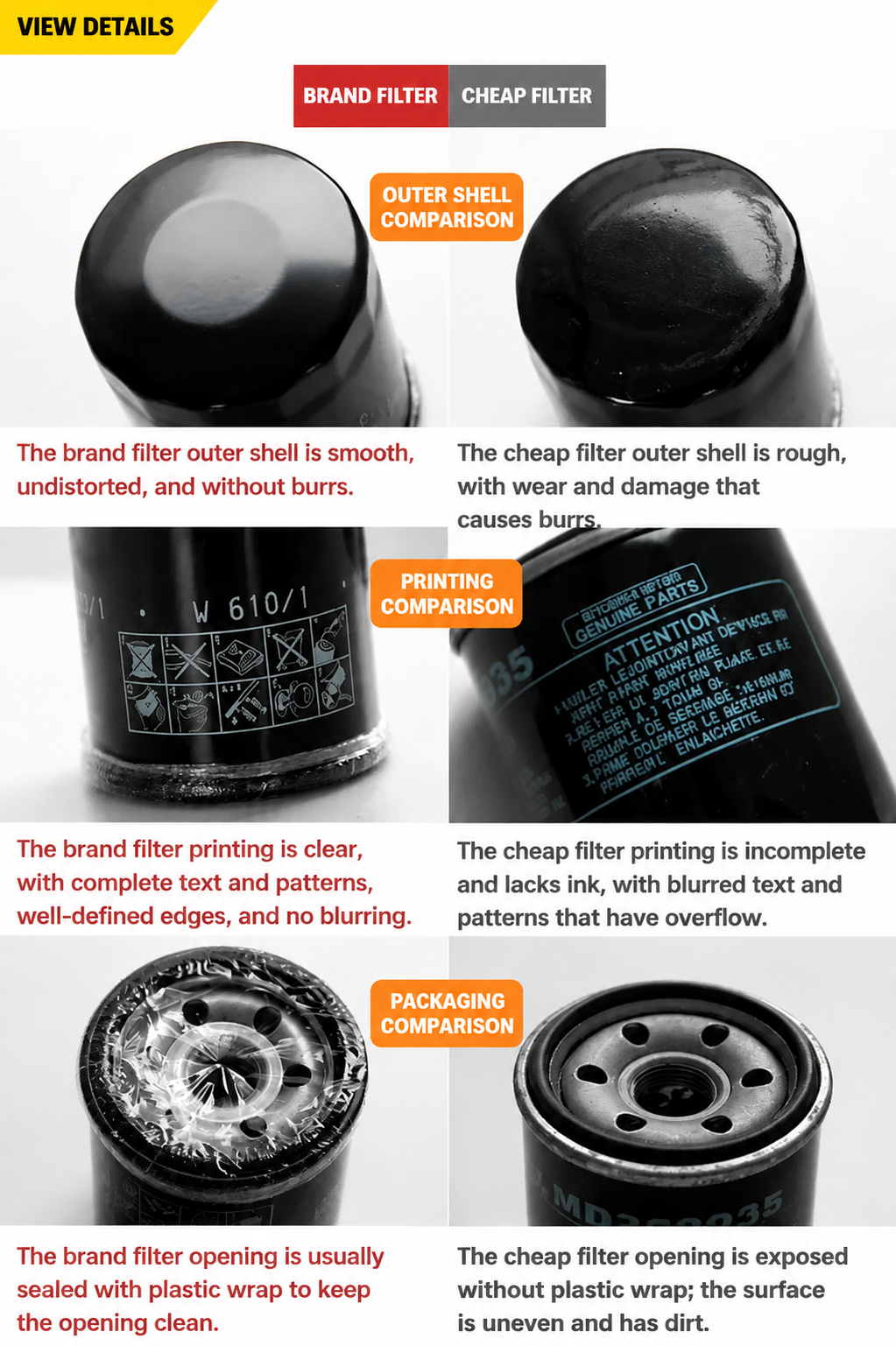
Step 1: Inspect Exterior Finish and Craftsmanship
Judging by appearance is remarkably effective. Reputable brand manufacturers use high-grade materials, precision stamping, and clear, flawless printing. Cheap or counterfeit filters often have suspicious origins—some are even discarded filters repainted and refurbished—with rough edges, blurred fonts, and cut corners.
Step 2: Check the Flexibility and Softness of the Gasket
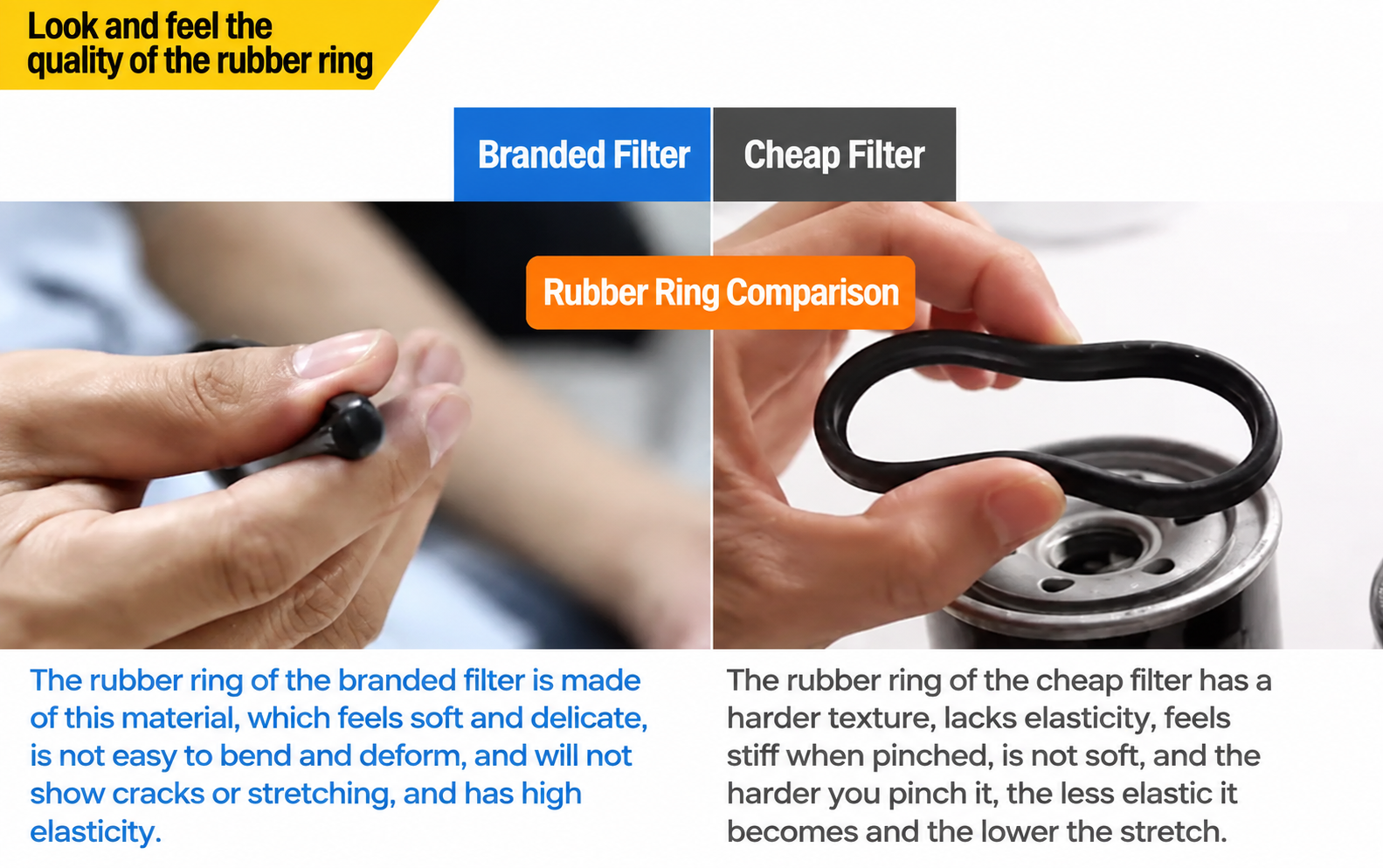
- High-Quality Filter: The rubber gasket is thick, supple, and highly elastic. Even when pinched or bent firmly, it rebounds without cracking.
- Cheap Filter: The gasket feels hard, stiff, and brittle. It lacks elasticity, feels harder the more you press it, and risks cracking under compression.
Step 3: Verify the Presence of an Anti-Drainback Valve
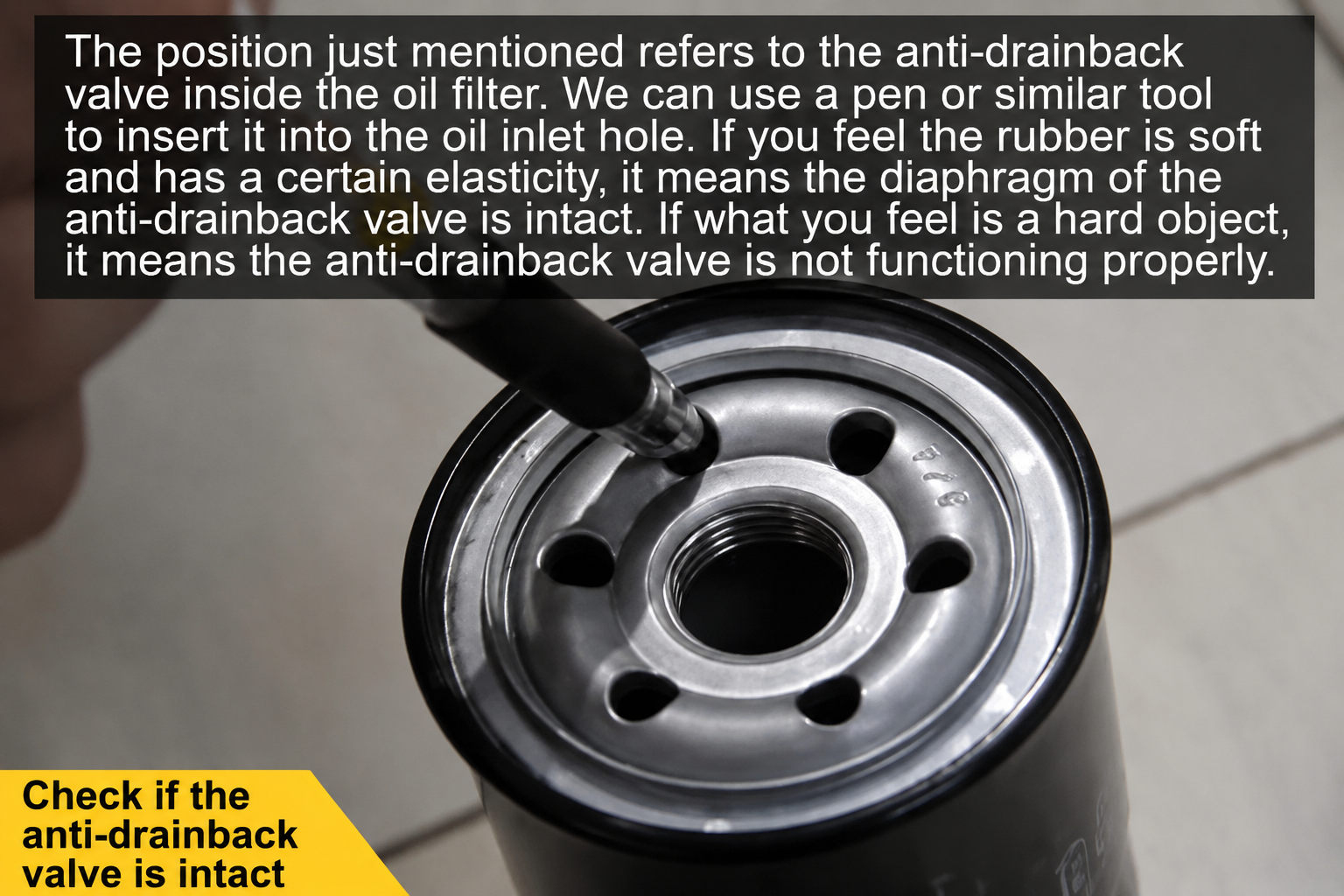
Look inside the inlet holes for a flexible silicone or rubber diaphragm. Though simple, its job is vital: it stops oil from draining back to the oil pan when the engine shuts off. This ensures instant oil pressure during cold starts, minimizing dry engine friction.
Step 4: Feel the Internal Rigidity of the Filter Element
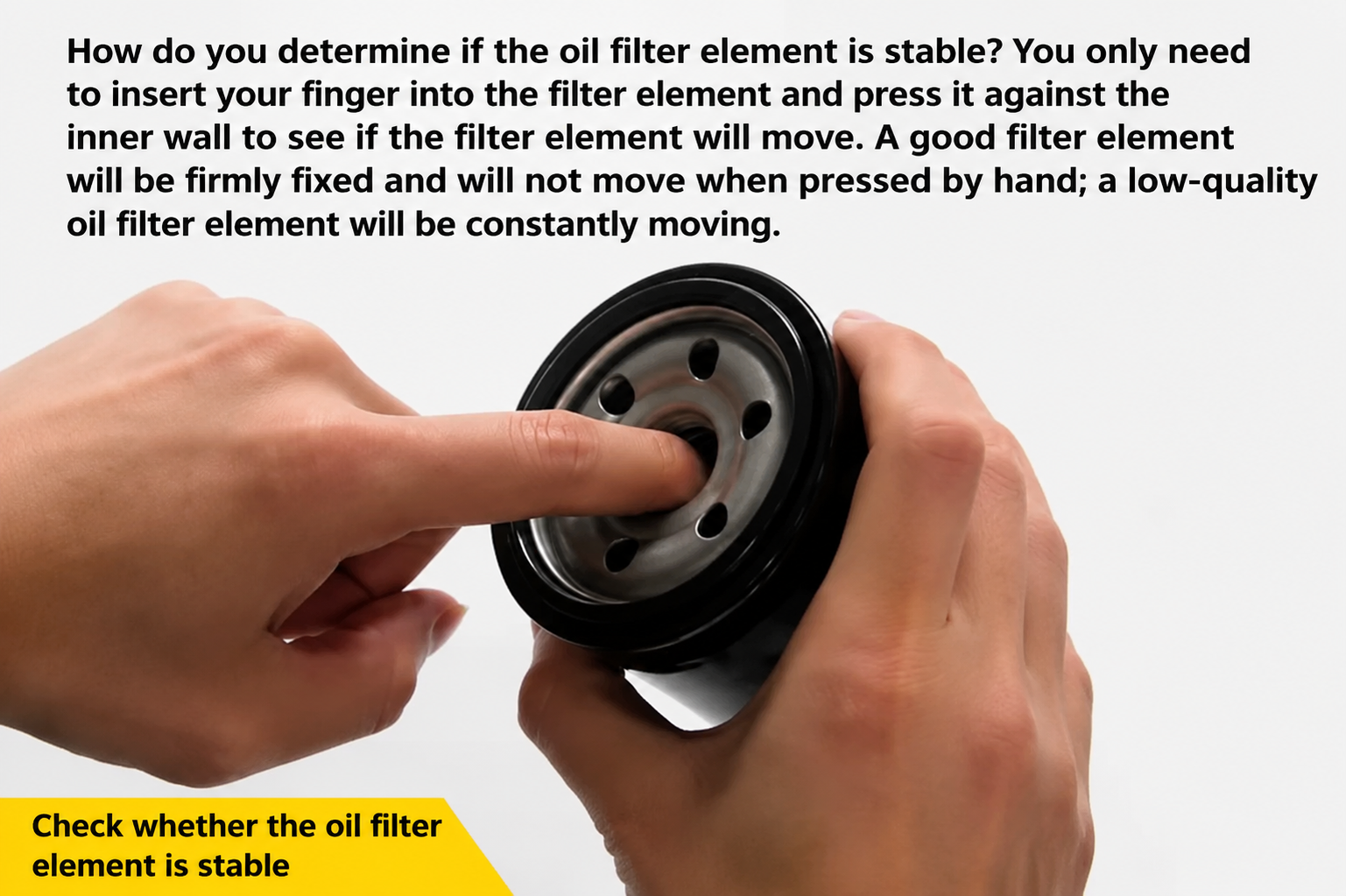
Insert a finger through the central threaded hole to feel the inner structure. In a well-built filter, the filter element is firmly anchored and will not shift or wobble under oil pressure spikes or road vibrations, ensuring all oil passes properly through the filter media.
Step 5: Shake the Filter Vigorously for Rattles
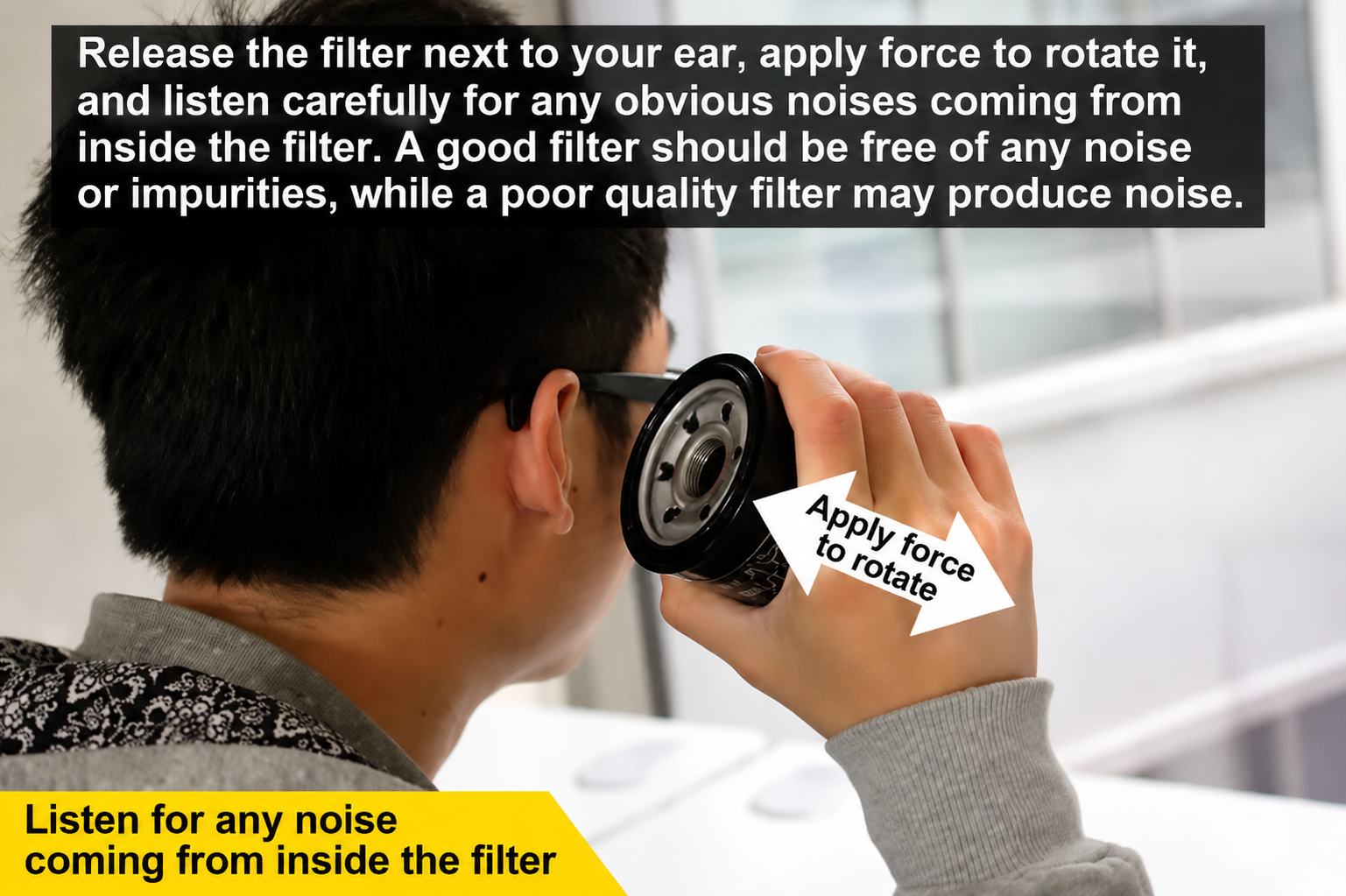
High-quality filters are assembled with tight internal tolerances and heavy-duty retention springs. When shaken vigorously, there should be no internal movement, rattling, or loose component noises.
Summary
A good oil filter requires three essential elements: high-efficiency filter media, precision-calibrated bypass and anti-drainback valves, and durable, heat-resistant seals. Always purchase filters from certified, reputable brandsto keep your engine protected and operating at peak performance.
Post time:Sep-25-2020
