
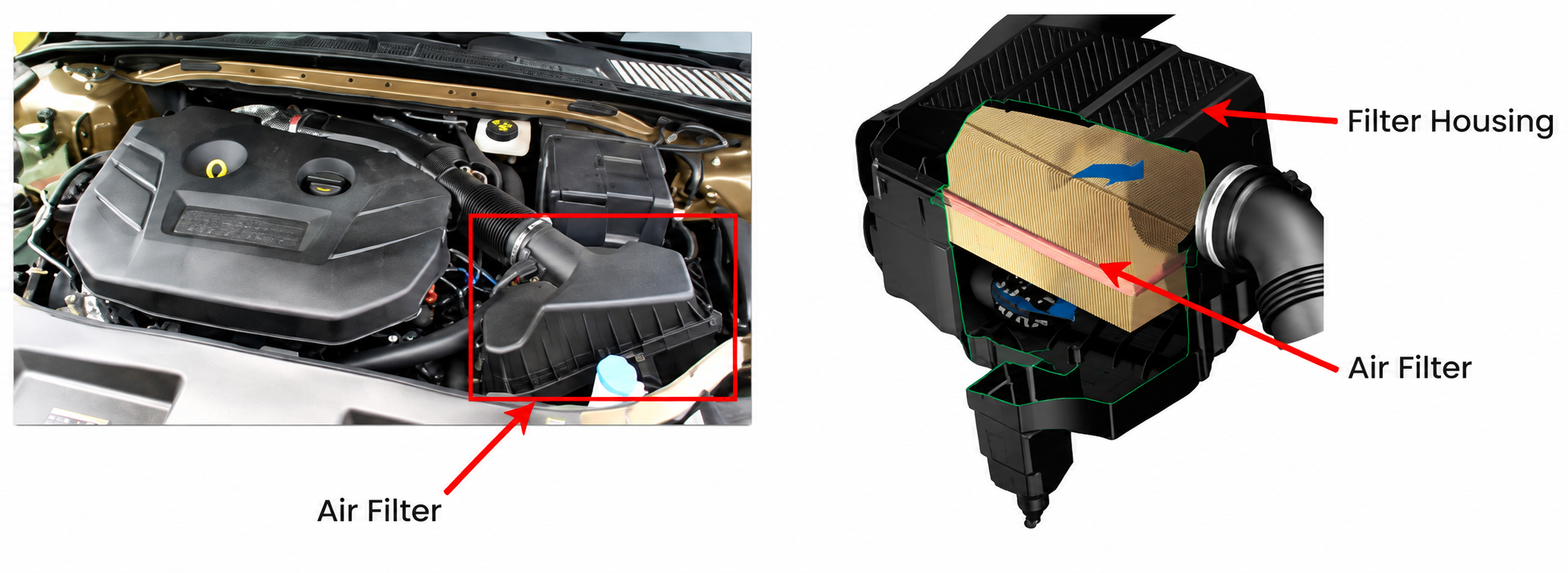
Air filter: Located in the engine intake system, it consists of a housing and a filter element. Passenger cars usually use single-stage filtration (i.e., no pre-filter). Dust and other impurities in the air entering the engine are mainly intercepted by the filter element, ensuring that sufficient, clean air enters the cylinder. The filter element is a wear item and requires regular replacement and maintenance.
QA& Why does air need to be filtered?

The engine generates power by drawing in a large amount of air and burning it with fuel. If unfiltered air enters the engine, suspended dust, sand, and other impurities in the air will be drawn into the cylinder, causing wear on moving parts such as the piston assembly and cylinder, as well as “cylinder scoring.” At the same time, it can interfere with or damage sensitive components such as the mass airflow sensor, causing false signals and leading to problems such as incomplete combustion and excessive emissions.
QA& How often should the air filter be replaced?
For OEM-quality air filter elements, refer to the replacement interval in the original maintenance manual. For passenger cars, this is usually every 15,000–20,000 km. If the vehicle is often driven in severe operating conditions (dusty roads, construction sites, etc.) or in areas with poor air quality, it should be replaced no later than every 10,000 km. Experienced car owners keep it within the safe range of 7,500–8,000 km, which you can also use as a reference.
QA& What types of air filters are there?
Common passenger car air filter elements include those represented by European and American vehicle brands, which use plant-fiber filter paper as the filtration medium. These filter elements usually contain no plastic parts and are more environmentally friendly. There are also air filters commonly used by Japanese and Korean vehicle brands, which use non-woven fabric as the filtration medium. Functionally, both types of filter elements are the same.
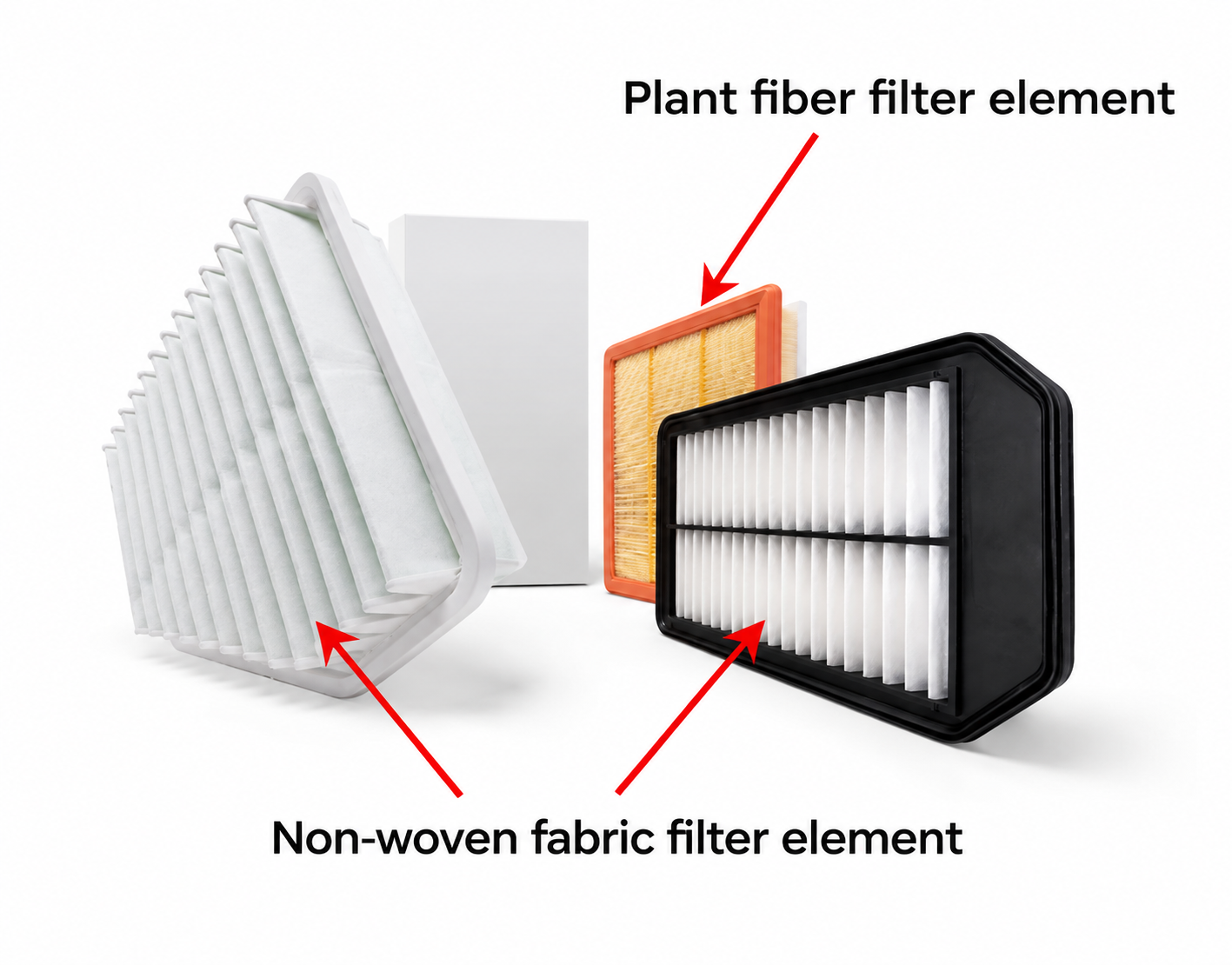
Due to different vehicle models designed by OEMs, the space reserved for the air filter and the technical requirements vary, resulting in low universality of air filter elements. Therefore, the design principle of the air filter is to make the most of the limited space to meet the vehicle manufacturer’s various technical specifications. That is why, among air filter products, in addition to the most common rectangular filter elements, there are also trapezoidal, chamfered, and cylindrical filter elements—truly vehicle-specific and tailor-made!
Post time:Sep-25-2020
